Black Library: The App
Games Workshop LimitedBooks & Reference
1.9120.00 Reviews
- Version
- 1.1.0
- Installs
- 50.00K
- Age Rating
- Teen
Screenshots
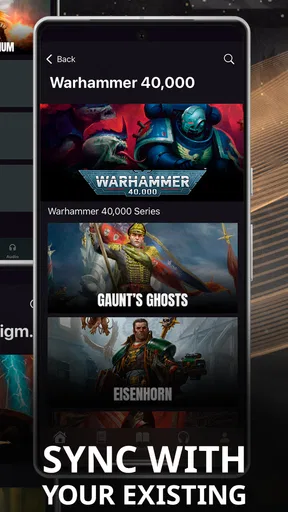
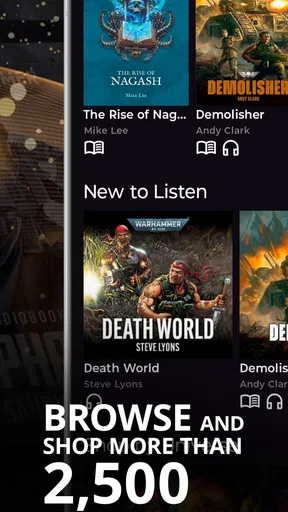
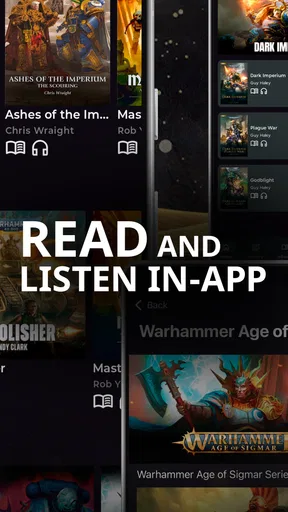
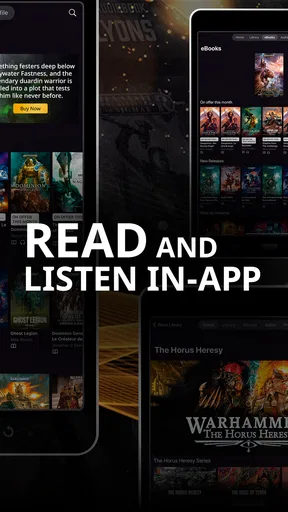
Our Review of Black Library: The App
 Analysis by Appyee
Black Library: The App is aimed at one clear task: putting Warhammer audiobooks and eBooks in one mobile reading space. I see it as a focused Books & Reference app rather than a general bookstore or a broad reading platform. That focus is its main appeal. If your shelves already lean heavily toward Warhammer fiction, the idea of moving from browsing to reading without leaving a dedicated Black Library environment is immediately attractive.
My overall reaction is more cautious than enthusiastic, though. The app is free to install, comes from Games Workshop Limited, and has reached over 50 thousand installs, but its current average sits at 1.9 from around 427 ratings. That gap between the appealing concept and the modest public response matters. I would not dismiss it automatically, because a specialist reader may still find real value here, but I would approach it as a developing reader rather than a polished replacement for every book app I already use.
The real value is having Warhammer audio and digital reading together
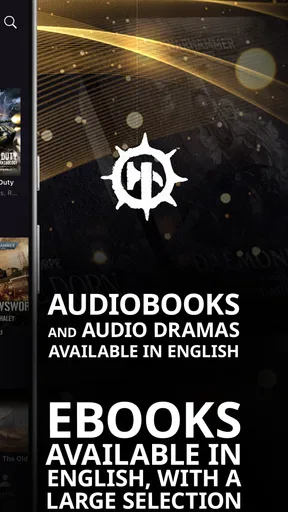
The most important capability is not simply that the app contains books. It is the combination of Warhammer audiobooks and eBooks in a single dedicated place. That changes the experience for someone who follows a long fictional universe and wants to switch between listening and reading according to the moment.
In a general eBook app, Warhammer titles can feel like isolated purchases among unrelated recommendations, library tools, and storefront material. A specialist app gives the collection a stronger identity. I can imagine opening it with a particular author, faction, era, or series in mind instead of starting from a blank search box. That kind of context is useful when a universe has a deep back catalogue and the next book is not always obvious.
The audio-and-text pairing also suits the way many people consume fiction now. I might read during a quiet evening, then continue with an audiobook while commuting or doing household work. The benefit is not that either format is revolutionary on its own; it is the possibility of keeping my Warhammer reading habit inside one purpose-built service.
That distinction is important for expectations. This is not an app I would install for general literature, reference books across many publishers, or casual reading outside the Warhammer world. Its usefulness depends heavily on whether the Black Library catalogue is already part of my interests. For a reader who does not recognize the setting or does not want a specialist collection, the narrow focus becomes a limitation rather than a strength.
I also think the dedicated approach can reduce a small but real kind of friction: remembering where a particular title lives. When audio and eBooks are scattered among several storefronts, I have to track purchases, apps, downloads, and reading progress separately. A single destination has the potential to make that routine easier, even if it does not remove every problem involved in digital ownership.
Why format choice matters more than it first appears
An eBook is best when I want to control the pace, revisit a passage, or read in a place where audio would be inconvenient. An audiobook is better when my eyes and hands are occupied. Having both options associated with the same specialist catalogue makes the app more flexible than a service built around only one format.
There is also a practical trade-off. Audio can help me keep up with a long series when reading time is scarce, but it is less convenient for checking names, timelines, or small details. Text is easier for that kind of reference, while listening is more immersive during a walk. The app’s central promise makes sense because Warhammer fiction often rewards both sustained immersion and occasional consultation.
My advice would be to decide which format I would genuinely use before treating the app as a complete solution. If I mainly want audiobooks, the reading side may be secondary. If I collect eBooks and only occasionally listen, the reverse is true. The combined catalogue is useful, but it does not automatically make every title equally worthwhile in both forms.
What using it feels like in an ordinary routine
I would use Black Library: The App as a continuation tool rather than as a place to browse endlessly. A realistic routine would be choosing an eBook before bed, reading a few chapters, and then switching to an audiobook the next day while traveling. That workflow makes the app’s central capability meaningful: the story stays connected to the same Warhammer-focused reading habit even when my available time changes.
For that routine to work well, I would first establish a simple personal system. I would keep a note of the series I am following, the last completed title, and whether I prefer audio or text for the next entry. This may sound unnecessary, but specialist universes can contain overlapping storylines and many possible starting points. A little planning prevents the app from becoming a catalogue I browse without actually finishing anything.
One useful habit is to reserve audio for repetitive parts of the day and text for moments when I can concentrate. That avoids judging an audiobook unfairly because I missed a key detail while distracted. It also prevents an eBook from becoming a chore when I am tired. The app is most convincing when it adapts to my schedule, not when I force one format to fit every situation.
I would also treat downloads and device storage as part of the decision before building a large offline library. Digital books and audio occupy different amounts of space, and a reader who wants several long listening sessions available at once should think about what is stored locally. I am not presenting that as a confirmed limitation of this particular release; it is simply sensible preparation whenever an app combines substantial reading and listening content.
The current version is 1.1.0, which makes me view the product as something still finding its shape. I would keep the app updated and pay attention to how reliably it handles my personal reading routine before committing to it as my only Warhammer library. Early versions can improve quickly, but they can also make consistency more important than a long list of promised possibilities.
A practical way to start without getting lost
If I were introducing a friend to the app, I would not tell them to explore the entire catalogue immediately. I would choose one clearly defined reading goal: finish a particular novel, begin a focused series, or test one audiobook during a week of commuting. That gives the app a fair trial based on actual use instead of first impressions from browsing.
After that first test, I would compare the two formats for the same kind of session. Did text make it easier to remember characters? Did audio fit naturally into travel time? Did switching formats help me continue the story, or did it make the experience feel fragmented? Those answers are more useful than simply asking whether the interface looks attractive.
I would also check the purchase screen carefully before confirming anything. The app itself is free, while in-app purchases range from $2.99 to $99.99 per item. That wide span suggests I should treat the free download as access to the platform, not as an assumption that the reading catalogue costs nothing. I would decide on a spending limit in advance, especially if I am tempted by several books in one visit.
The best scenario is a committed reader with changing free time
The strongest use case is someone who already wants Warhammer fiction and has an uneven schedule. Imagine a reader who starts a novel at home, spends the next day traveling, and then has only a short evening window afterward. The dedicated audio-and-eBook approach can keep that person connected to the same fictional world without requiring a different discovery process every time the schedule changes.
This is especially appealing for readers who dislike choosing between formats. Some people read faster than they listen, while others absorb more when a narrator carries the story. A combined app lets the format follow the situation. I would consider that the app’s most practical advantage, because it addresses a real habit rather than offering a feature I might admire once and forget.
It may also suit a fan who wants a more concentrated catalogue than a large general marketplace provides. Broad storefronts are excellent when I want to compare books from many publishers, but they can make a specialist collection feel scattered. Here, the narrower identity can make the app feel more relevant from the first session.
There is a second, less obvious use case: rebuilding a reading habit around a familiar universe. When I am struggling to choose a new book, an established interest can remove some decision fatigue. I already know the tone and setting I want, so the app becomes a structured doorway back into reading. That will not work for everyone, but it is a genuine reason a specialist library can outperform a larger, less focused one.
I would not recommend making it the first choice for someone who wants a neutral reading tool. A person who reads across many genres may prefer an established eBook ecosystem with broader library management, wider discovery, and a more varied collection. Likewise, someone who only wants a single Warhammer title may find a general store more convenient if that is where they already buy books.
The tradeoffs behind the specialist approach
The public response is the clearest warning sign I would keep in mind. An average rating of 1.9 is not proof that every reader will have a poor experience, but it is too low to ignore. It tells me to test the app with a modest commitment first, avoid assuming that the specialist branding guarantees polish, and keep an alternative reading method available until the routine feels dependable.
The cost structure deserves equal attention. Free installation lowers the barrier to trying the app, but the in-app purchase range can reach $99.99 for an individual item. I would never browse while tired or impulsive and then discover that a large purchase was easier to make than expected. My approach would be to identify the exact title and format first, then review the displayed purchase amount before proceeding.
Another trade-off is concentration. The app’s narrow Warhammer identity is precisely what makes it useful to fans, but it also means the catalogue may not serve readers who want to move freely between unrelated authors and genres. I would rather use it alongside a broader reading app than expect it to replace one. Specialist tools are often strongest as part of a personal setup, not as the only tool on a phone.
I would also avoid assuming that owning a digital book feels identical to owning a paper copy. A dedicated app can be convenient, but my access is tied to the digital environment in which the purchase is made. That makes account continuity and app stability more important to me than they would be with a physical paperback. For expensive purchases, I would think carefully about how often I expect to reread the title and whether I value a physical edition instead.
The Teen content rating is another useful signal about the intended audience. I would treat the app as a better fit for older readers and teenagers than for young children, particularly because Warhammer fiction can involve mature themes even when the app itself is simply a reading platform. Parents choosing it for a younger reader should make that decision based on the individual books, not only on the fact that the download is free.
Where a different option may be better
If my priority were the widest possible selection, I would choose a general eBook or audiobook marketplace instead. Its main advantage would be breadth and familiarity across publishers. If my priority were collecting physical editions, I would look to booksellers or local shops, because an app cannot provide the same shelf presence, resale possibilities, or independence from a digital account.
If I already have a comfortable audiobook service and only need occasional Warhammer titles, I would compare the total cost before changing habits. The dedicated app becomes more persuasive when I want its focused catalogue and the ability to move between audio and eBook formats. It is less compelling when I am satisfied with separate services and do not need a specialist home.
For readers who need advanced general reading tools, accessibility options, or a mature cross-platform library system, I would test those needs directly rather than assuming this app matches them. The verified product identity is clear, but a focused catalogue does not automatically equal the strongest tool for every reading preference. My recommendation is conditional: choose it for the Warhammer-centered workflow, not merely because it is free to install.
Who gains the most from this focused library
I think the best audience is an existing Warhammer reader who wants a convenient way to keep fiction close at hand and switch between listening and reading. That person is likely to understand the value of a dedicated catalogue immediately. They are not looking for a universal bookstore; they want a more direct path into a particular fictional world.
It is also a reasonable experiment for a curious newcomer who has a specific title in mind and is willing to start small. I would recommend choosing one purchase, trying both available formats where appropriate, and judging the experience over several sessions. That approach limits financial risk while revealing whether the app actually fits the reader’s routine.
I would be more hesitant to recommend it to a casual reader who wants a broad selection, a parent seeking children’s material, or anyone uncomfortable with in-app purchases. The Teen rating and the possible price range make a little advance attention worthwhile. Similarly, readers who strongly prefer paper books should not expect a mobile library to recreate the physical experience.
Games Workshop Limited has placed the app in the Books & Reference category, and that description fits its purpose better than treating it like a social fan hub or a general entertainment app. I would use it as a focused reading destination, not as a replacement for every Warhammer resource. That distinction keeps expectations realistic and makes the central capability easier to judge.
My final view is cautiously positive for the right person. The app earns its place when format flexibility is more important than catalogue breadth. I like the idea of carrying Warhammer audio and digital reading together, and I can see it working well for a fan whose free time changes from day to day. However, the low average rating, the broad in-app purchase range, and the specialist scope mean I would begin carefully rather than move my entire library at once.
For me, the sensible decision is to install the free app, choose one clearly defined reading goal, and see whether the audio-and-eBook workflow genuinely removes friction. If it does, the focused experience may be worth keeping alongside a broader reading service. If it does not, the app’s narrow purpose leaves little reason to stay. That makes Black Library: The App a targeted recommendation: potentially useful for committed Warhammer readers, but not a universal answer for mobile books and audiobooks.
Verdict
Strengths of Black Library: The App
- Official Warhammer lore and fiction from Black Library.
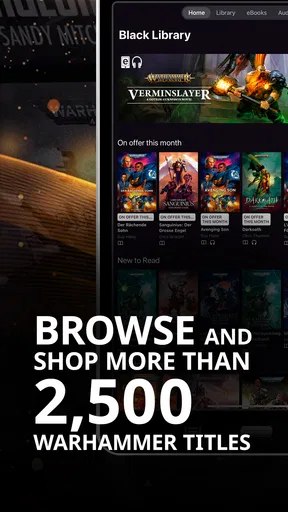
- Easy access to a large collection of digital books.
- Useful search and browsing tools for finding titles.
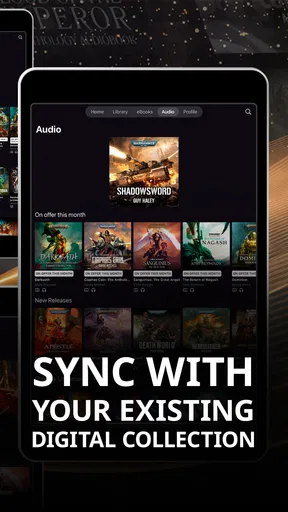
- Reading progress syncs across supported devices.
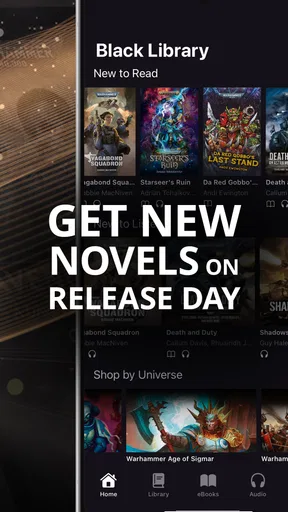
- Regularly updated with new releases and featured content.
Limitations of Black Library: The App
- Many books require separate purchases or subscriptions.
- The catalog may focus heavily on Warhammer titles.
- Some older books may be unavailable digitally.
- Reading features are fairly basic compared with dedicated ebook apps.
- Availability and pricing can vary by region.
Other Releases by Games Workshop Limited
View All
Warhammer 40,000: The App
Lifestyle3.0
Similar Picks in This Category
View All
Google Play Books & Audiobooks
Google LLC4.7

네이버 - NAVER
NAVER Corp.3.5

Wattpad - Read & Write Stories
Wattpad.com3.7

King James Bible - Verse+Audio
Ozion4.8

Bible Offline-KJV Holy Bible
Bíblia Offline4.9

Amazon Kindle: Reading App
Amazon Mobile LLC4.8
Frequently Asked Questions
What is Black Library: The App?
Black Library: The App is a digital reading platform for fans of Warhammer fiction. It provides access to novels, novellas, short stories, audio-related content, and other publications from Black Library, covering universes such as Warhammer 40,000, Age of Sigmar, and The Horus Heresy. The catalog and available features may vary by region, account type, and current publisher offerings.
Do I need an account or subscription to use Black Library: The App?
You will generally need to create or sign in to an account to manage your library, purchases, and reading progress. Whether a subscription is required depends on the specific version of the app and the content model currently offered. Some titles may need to be purchased individually, while other features or collections may be available through promotional access or a paid plan.
Can I read books offline after downloading them?
The app may allow supported books or other digital content to be downloaded for offline reading, which is useful when traveling or when you have limited internet access. You normally need to download the title while connected first, and some content can remain protected by account or licensing restrictions. Offline availability may differ between books and devices.
What kind of Warhammer content can I find in the app?
Black Library: The App is designed for readers interested in official Warhammer fiction, including stories about Space Marines, Chaos, the Imperium, xenos factions, Age of Sigmar heroes, and historical events from The Horus Heresy. The exact selection changes over time, and not every Black Library publication is necessarily available in the app or in every country.
Is Black Library: The App suitable for new Warhammer readers?
Yes, the app can be useful for beginners because it brings many Warhammer stories together in one place and makes it easier to explore different factions, authors, and settings. However, the large catalog may feel overwhelming at first. New readers may benefit from starting with an introductory standalone novel, a recommended series, or a story connected to a faction they already enjoy.
